
Concrete Scanning Services: GPR vs Concrete X-Ray
Advanced Subsurface Detection Across Southern California
When drilling, cutting, or coring concrete, knowing what lies beneath the surface is critical. Reliant Testing Engineers, Inc. provides advanced concrete scanning solutions using Ground Penetrating Radar (GPR) and Concrete X-Ray imaging to help contractors, engineers, and facility managers make safe, informed decisions before construction work begins.
Both technologies are non-destructive testing methods designed to locate embedded objects such as rebar, post-tension cables, conduits, utilities, and structural anomalies within concrete. The right method depends on project requirements, accuracy needs, and site conditions.
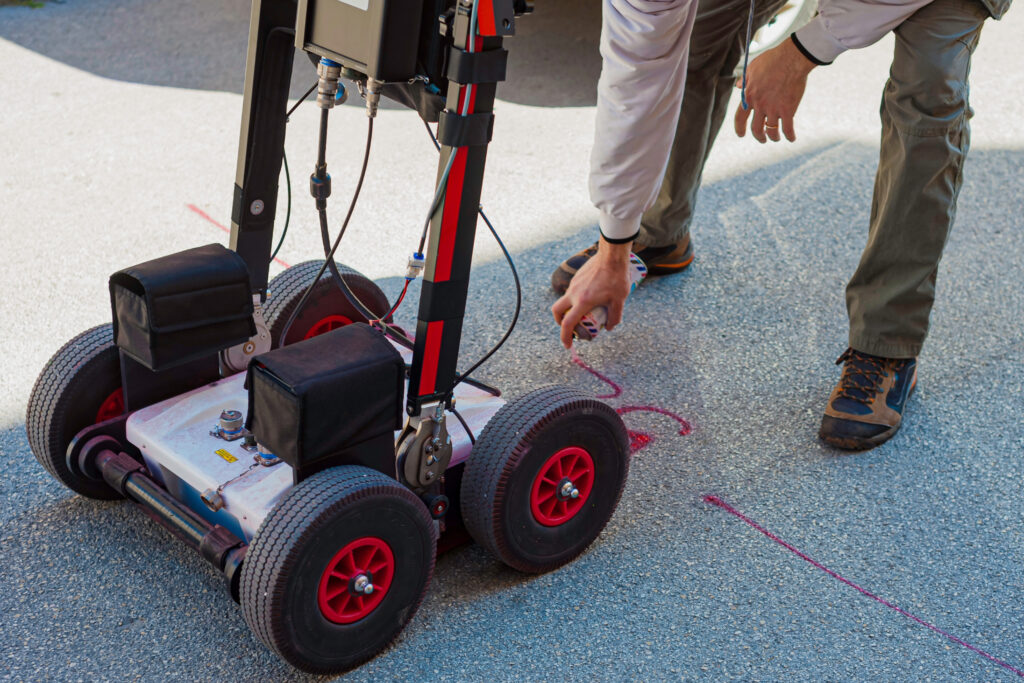
Ground Penetrating Radar (GPR) Scanning
Ground Penetrating Radar uses radio waves to detect subsurface objects within concrete and other materials. It is a fast, cost-effective method for scanning large areas and identifying embedded targets before drilling or cutting.
What GPR Can Detect
- Rebar and reinforcing steel
- Post-tension cables
- Electrical conduits and plumbing lines
- Metallic and non-metallic objects
- Slab thickness and subsurface layout
GPR is widely used because it provides rapid results with minimal setup and can scan large areas efficiently. It is often preferred when speed and coverage are priorities.
Key Advantages of GPR
- Non-invasive and safe for occupied buildings
- Faster scanning over large surfaces
- Lower cost compared to X-ray imaging
- Requires access to only one side of the structure
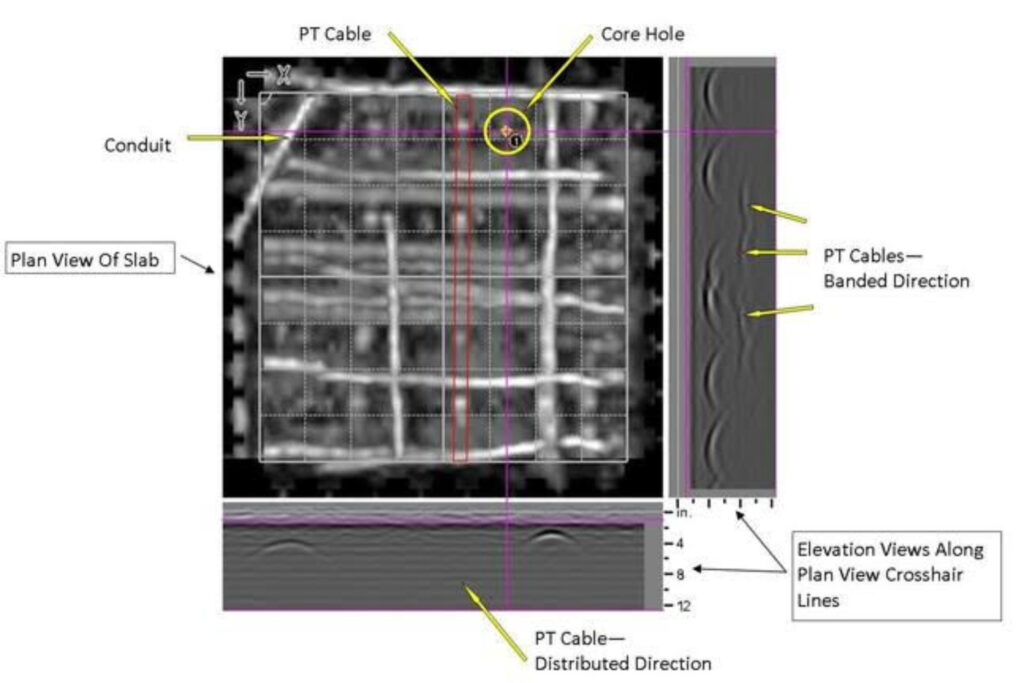
Concrete X-Ray Scanning (Radiography)
Concrete X-Ray scanning uses radiographic imaging to produce highly detailed views of embedded materials inside concrete structures. It is often selected when maximum accuracy and clarity are required.
What Concrete X-Ray Can Detect
- Exact size and location of embedded materials
- Overlapping systems within congested areas
- Corrosion or defects in embedded steel
- Complex structural conditions in walls, slabs, and CMU
Concrete X-Ray is considered more precise than GPR because it produces clearer imaging and reduces interpretation uncertainty.
Key Advantages of Concrete X-Ray
- Highest level of accuracy and detail
- Ideal for complex or congested structural areas
- Useful when there is little margin for error
- Can be used to confirm or supplement GPR findings
GPR vs Concrete X-Ray: Which Method Is Right?
The best scanning method depends on your project’s objectives, site conditions, and required level of detail. In many cases, GPR and X-Ray are used together to achieve the most reliable results.
Comparison Overview
Feature | Ground Penetrating Radar (GPR) | Concrete X-Ray |
Speed | Fast scanning over large areas | Slower, targeted scanning |
Accuracy | High, but interpretation required | Extremely high precision |
Cost | Generally lower | Typically higher |
Detail Level | Good overall mapping | Superior detail and clarity |
Best Use | Large-area scanning and general detection | Critical precision and complex structures |
GPR is typically more cost-effective and efficient for large areas, while X-Ray is often chosen when maximum accuracy is essential.
Why Choose Reliant Testing Engineers for Concrete Scanning?
- Certified technicians with NDT expertise
- Compliance with CBC, ASNT, AWS, and ASME standards
- Advanced GPR and radiographic imaging equipment
- Experience in high-seismic and complex construction environments
- Integrated services with NDT, structural inspections, and QA/QC
- Coverage across Southern California, including High Desert, Inland Empire, Los Angeles, Orange County and San Diego
We help you select the most effective scanning method based on your project scope, risk level, and budget—ensuring accurate results without unnecessary costs.
Serving Southern California:
Los Angeles, Orange County, San Fernando Valley, High Desert, Inland Empire, Beaumont, Palm Springs, and San Diego.
We have extensive experience working in high-seismic zones, remote desert locations, and fast-paced urban construction environments. Our regional coverage allows us to mobilize quickly and provide consistent, code-compliant inspection services wherever your project is located in Southern California.